
In 2022, IEG decided to shift away from the 1% for the Planet program to pursue a different method of giving. We wanted to do more to give back to Indigenous communities by supporting community-driven projects that may not otherwise be able to acquire external funding or afford to hire a consulting company. This aspiration led to the creation of IEG’s 2% for the People program. IEG donates 2% of our annual fee revenues to the 2% for the People program.
The primary goal of the 2% for the People program is to contribute to advancing reconciliation with Indigenous communities in Canada. This is achieved through both monetary contributions and in-kind contributions of IEG staff time and resources towards Indigenous community-driven projects, with a focus on communities in the areas we work.
The first project completed through the 2% for the People program was a 2022 tree planting campaign with the Clearwater River Dënë Nation in northern Saskatchewan. The program was so valued and well-received that IEG has returned annually to continue supporting the program, with additional funding provided by NexGen Energy.
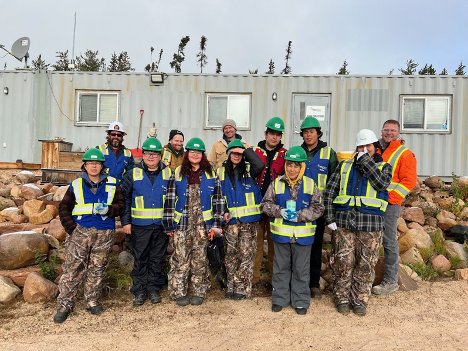
Some of the other community initiatives supported through the 2% for the People program include:
We hope the 2% for the People program inspires other companies to consider how they can advance reconciliation in their work and in their giving.
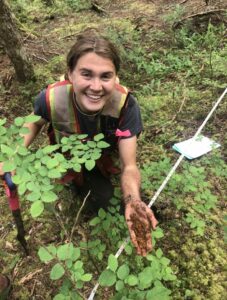
Congratulations to Alyssa Robinson, for being the 2024 IEG Soil Science Scholarship recipient!
Alyssa Robinson is a 3rd year PhD student whose research focuses on the legacies of ancestrally management on the soils of forest gardens. She works collaboratively with the Ts’msyen Nation and the Gitxsan Nation to study how Indigenous stewardship practices have shaped soil processes and properties across generations. Her work highlights the role of cultural burning and forest gardening practices such as fish bone fertilization in creating nutrient-rich soils that take shape thanks to deep-time human–soil relationships. Her research aims to contribute to both the scientific understanding and to the revitalization of Indigenous land stewardship practices.
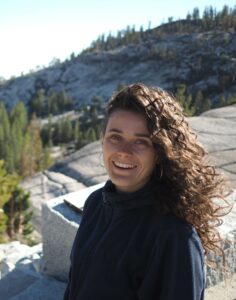
Congratulations to Sasha Pollet, for being the 2023 IEG Soil Science Scholarship recipient!
Sasha is a PhD Candidate in Soil Science and has done research in Belgium, France, Mexico and Canada. Through her research, Sasha wants to deepen the understanding of complex soil-root-plant interactions and the role of roots in acquiring nutrients and storing carbon in the soil. In doing so, she wants to develop an integrative research approach that can be scaled up to maintain crop production while reducing the need for fertilizers and increasing soil-plant resiliency to climate change.
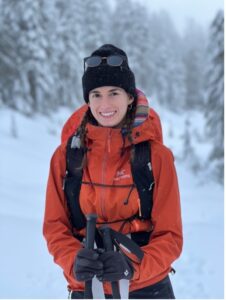
Congratulations to Asha Wareham, for being one of the 2022 IEG Soil Science Scholarship recipients!
Asha Wareham is a B.Sc. student in Global Resource Systems with a specialization in sustainable agriculture and soil science. Asha’s research interests include managing soil nutrient dynamics and soil organic matter for improved climate adaptation and mitigation outcomes in regenerative agroecosystems, which she looks forward to pursuing in future graduate studies. As a seasoned farmworker in diversified cropping systems, Asha is passionate about considering agricultural management decisions with a research lens, advocating for farmer priorities within academia, and exploring the responsibilities and reconciliation needed to support indigenous sovereignty within provincial land and food systems.
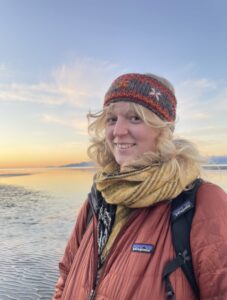
Congratulations to Olivia Sheena, for being one of the 2022 IEG Soil Science Scholarship recipients!
Olivia is completing her undergrad at UBC studying Applied Biology with a specialization in sustainable agriculture and environment. Her love for soil has grown through taking classes with Maja Krzic and Sandra Brown, as well as through spending 2 summers with her hands in the soil working at Swift River Farm in Idaho. She is passionate about regenerative agriculture practices and their importance in improving soil quality to support sustainable crop production. Soil critters particularly fascinate her, so soil biology is her favourite area to learn about! In Oliva’s free time she enjoys camping, crafting, and playing with her dog.
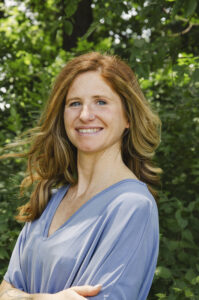
Congratulations to Jordy Kersey, for being IEG’s second annual Soil Science Scholarship recipient!
Jordy Kersey (MSc) is currently a PhD candidate in soil science working with Dr. Sean Smukler, in the SAL lab. Her research is focused on the impact of regenerative agricultural practices on climate breakdown mitigation and adaptation in the lower Fraser Valley, British Columbia. Specifically, she is investigating how agricultural management practices influence soil carbon and nitrogen cycling, greenhouse gas emissions, and soil water regulation. Jordy is passionate about working towards a more sustainable future and finding meaningful ways to improve agricultural systems to combat climate crisis while continuing to feed our world. Beyond academics, Jordy is an avid cookie baker, traveler, and enjoys long hikes through the forests of the PNW.
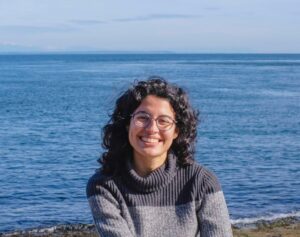
Congratulations to Paula Resque Porto, for being IEG’s first annual Soil Science Scholarship recipient!
Paula Resque Porto is a M.Sc. Soil Science student in the Sustainable Agricultural Landscapes (SAL) lab at UBC, under the supervision of Dr. Sean Smukler. The goal of her research is to improve provincial and national greenhouse gas (GHG) emission estimates for blueberry agroecosystems in British Columbia (BC). Her project explores the relationship between soil water and soil GHG emissions by quantifying the effect of different artificial drainage strategies used in blueberry fields in Delta, BC – a project funded by the Agriculture and Agri-Food Canada Agricultural GHG Program (AAFC AGGP).